Description: While driving though Hall Road once, I passed through 14 Hall road, a one of its kind, old classical western workshop-cum-house of the family of Hayat Furniture. I stood there, as I could see a white marble statue, through a window in a dimly lit room, it looked surreal. I left the place only to discover a couple of years later that it was the room of renowned artist Mahmood Hayat, and the building was his ancestral home.
There are only a handful of formally trained art teachers in Lahore, who operate a studio for training drawing, painting to aspiring artists from any walk of life. Veteran Artist Saeed Akhtar has kept the tradition alive for many years in Lahore, for aspiring students for admission at art universities. However, Mahmood Hayat, has taken it a step further by offering it to professionals and connoisseurs from any walk of life, at any age and any gender.
Born [1986] & Raised in Lahore, educated as a Product Designer at NCA. He started his journey from his grandfather’s wood workshop seeking inspiration from his brother’s library collection. Hayat went on to develop his own style of classical oil, charcoal and water paintings.
Mahmood Hayat has established his studio in Lahore, where he teaches Traditional Atelier Drawing & painting. During the course of his practice, Hayat has been liberal with experimenting with different mediums and techniques, his first solo exhibition had charcoal and watercolor paintings. His oil paintings are reminiscent of the skills of the old master from the classical & Renaissance period.
His work has been recognized and exhibited Nationally & Internationally for it’s quality of Skill, mastery of craft and novelty of aesthetics. Very recently Hayat had his exhibition called “divulgence” in Lahore.
Mahmood courteously agreed to an interview this summer at his studio, where we asked him the following questions about his life and work.
Usama Ahmed: Assalaoliakum Mahmood, Thank you so very much for taking time today.
Today, we saw one of the strongest spells of rain in Lahore and you were able to take time for this interview, thank you so very much.
UA: So, my first question to you is about your childhood. You lived on one of the old streets of Lahore [14 Hall Road], your family has a background which has been making authentic French furniture for a long while. Growing up in the 80s in Lahore, tell us a little what it was like.
Mahmood Hayat: Thank you for having me, Usama. So that is my ancestral house. The interesting thing is that it is as old as Pakistan itself, it basically predates pre-partition, and this place was laid down as a foundation by my late great grandfather, and it was a complete empire. They used to produce furniture, which is known as Reproduction French Furniture, and there is a rich history. There are some references, some catalogs, printed at that time, that I will share with you.
My start and origination was from a family in which research for skill and talent and all these things were already ingrained in genetics. So from the day I opened my eyes I started to digest the valuable information, visuals and those things.
When I used to go to my workshop, I used to look at my elders, and there were skilled laborers, craftsmen, carvers, painters who they used to finish off work. So at an early age, at school time, when I was at my O level, I was always very interested in drawing. How they used to draw patterns, how they used cut stencils, how they used to produce finishes on Tables.
I used to implement & finish off these things for client Projects later.
UA: Mahmood, you said in your previous interviews that you were inclined towards drawing from an early age, what were your inspirations back then. Especially share with us some incidents that played an instrumental part in your journey towards Art.
MH: I was always inclined towards drawing cartoons from Disney, all the animation from my time. When the time came to go to NCA, I always wanted to go into the Fine Arts category. I will tell you the reasons for that.
In about 1986, 1984 I was fortunate enough that my parents took me to a world tour. So I happened to have visited the Louvre, Versailles in France & In Spain, I have seen all the museums.
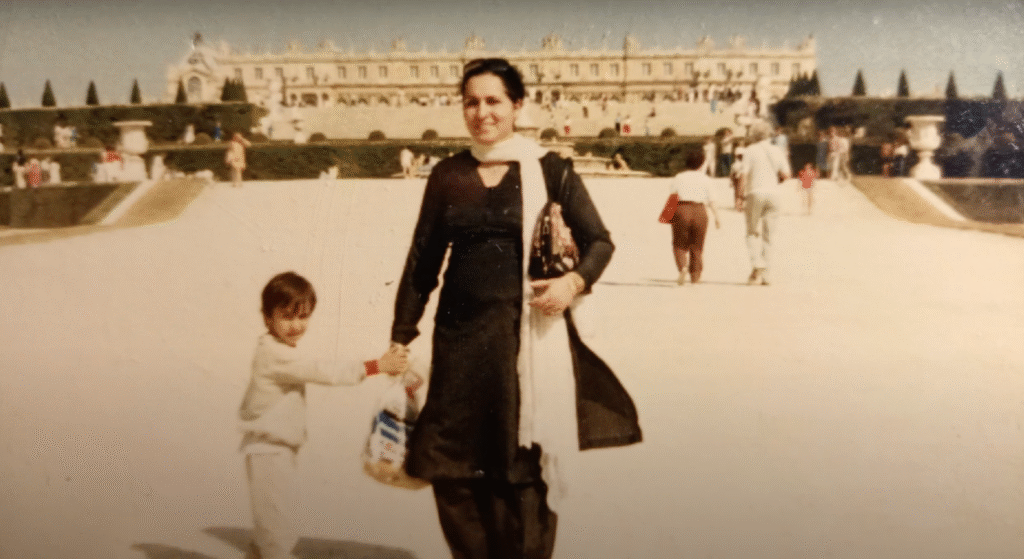
And from there my genetic visual code got developed and it is since then, so strong, that I became too much influenced by all the classical masters, which had worked on classical realism and orientalism.
All the books in the library and the interior at my house were related to that work, they shared the same category, same genre.
UA: I have always been curious about what circumstances led to your admission to NCA, then you went to product design, what happened there, and then your eventual spin as an oil painter today. Perhaps if you can take us through your journey.
MH: So when NCA’s admission came, I was not able to have proper guidance to go into the fine arts category. At that time I got misguided, that is why I opted for product design. and when I went to product design it was a new experience for me.
I would say I did not enjoy it, I had a wonderful time over there. I used to work very hard, there was a lot of effectiveness and efficiency in my work. If a teacher had given me one assignment, I used to do so much research and development for that product that I used to put forward two or three proposals in front of them of finished products, because I was passionate about all these creative processes. Like we see Michelangelo and Da-vinci (Leonardo da Vinci) who were not just doing paintings, they were also working in engineering products, they were fascinated about how birds fly, they also made flying machines. And they also made war machines, they also made engineering and architecture marvels.
By the time I got done with my product design, after that I started feeling what I actually want to do, so this is where I opted for this(references to the artwork in his background), this is where my journey took me. Towards this direction. [Mahmood Points to his Artwork/Painting in the background]
UA: Covid has been unkind to almost all of us.But I have witnessed in the past two years,you had to change your studio. There were no classes as no students were attending the studio, not many exhibitions happening in Lahore. How has covid affected you?
MH: Covid has affected everyone. If we see in Covid-19, some of the biggest world’s organizations closed down. So it happens to everybody. So it is Sabr( Patience), Shukar(thankfulness) and keep doing your work quietly, All has been kind, the people i met, and the people i work with, like for instance my studio was on rental, the landlords realized this, the initial covid stage which was 6 to 8 months, that was the most difficult, they supported me alot. They helped me, they said “it’s okay, if this happened, and things are not working, it does not matter, we will help you through this difficult time”. I am so grateful to Allah, there are good people around here as well. At that time, I had my focus and energy conserved. The interesting thing is that was the best time to produce work. There was a lock down, so I started producing work, I started doing live talk shows on instagram, I started talking to you all those artists. tHere is an artist in Sweden, some are in Islamabad and some in Lahore, so we used to have nice conversations with them.
Meanwhile, the live drawings that I used to do, I used to create their demonstration as well, for people to see how I draw in charcoal, sanguine, which are my favorite materials. So it was some time, patiently, that I had passed through thick and thin. All was good.
By Allah’s Grace, the market has stabilized now, the buyers are encouraged to buy. I recently, about 3 months ago, had an exhibition in which there were two world renowned artists with me. Their work was displayed alongside mine, and it went successfully quite well. In a single day, we had 2000 or more visitors coming over, having looked at those works, documenting them, and it was a great feeling.
UA: Finally, my last question.You have a love for videography, you make educational Documentaries. However, If I take the liberty to say that people find some of your documentaries like “Lost in Art” very controversial.
You appear confrontational towards contemporary art and likewise what is happening in Pakistan, why you think that taking a position as strong as you have, or perhaps rejecting a lot of contemporary practices straightforwardly as you do, is critical to you.
MH: Look, when we go in research of valuable information, when we go in the research of discovery, we come across a lot of truth in it. We discover things, which earlier were our misconceptions. If you look at my documentaries I have tried to briefly say, where we had started, how we were producing beautiful work in architecture, figurative, landscape, calligraphic manuscripts. That thing had a face, how we lose the face of that beautiful thing. Work moved towards minimalism.
Along with that I also discovered and researched what is the real meaning of art. If I look at our universities, from the last 50 to 80 years, we have not described the concept of art.
English alphabets are based on phonics, that’s the basis of the English language. Where the phonics of art came from. The universities did not even define the phonics of art, so I had to go to the origin, what is art, where it originated from.
If we do not not know what we are doing, and if a person is trying to truthfully define that thing, and the audience takes it as a controversy, they are limiting themselves towards learning.
So you do not have to limit yourself while learning, when you go into the discovery of learning new things, then you must be able to digest all that information.
My point is to show that people should absolutely have free will to choose. The dilemma is, the problem is, which is moving toward corruption, our universities are not offering free will to students, whether students want to opt for figurative, orientalism, modernism it should be their choice.
One should share all the information with them. The panelist, educators, principals, the ones
leading them, they enforce upon students, because we have been through that, my fellow colleagues have been through that.
They enforce that you have to follow this specific category. Not allowing students go other
way. This is wrong, art is a debatable topic. It has to be rediscovered, and it has to be discovered what is happening in it, so my only concern is that every person, every individual should be given a free platform, free choice, in whichever direction he wants to go, let him go, you respect all and take them forward.
UA: Thank you Mahmood for your valuable time today.
Additional Set of Questions.
- Mahmood Most of the content of your artwork is portraits and figures of human and figure, please tell us what you want to say through your art.
- You have been vocal about educating aspiring students on their selection of tutors, you specially made educational videos for that. What according to you should be criteria to select a tutor, and why it matters.
Glossary
Sabr An Islamic concept meaning patience. Shukar An Islamic Concept meaning thankfulness.
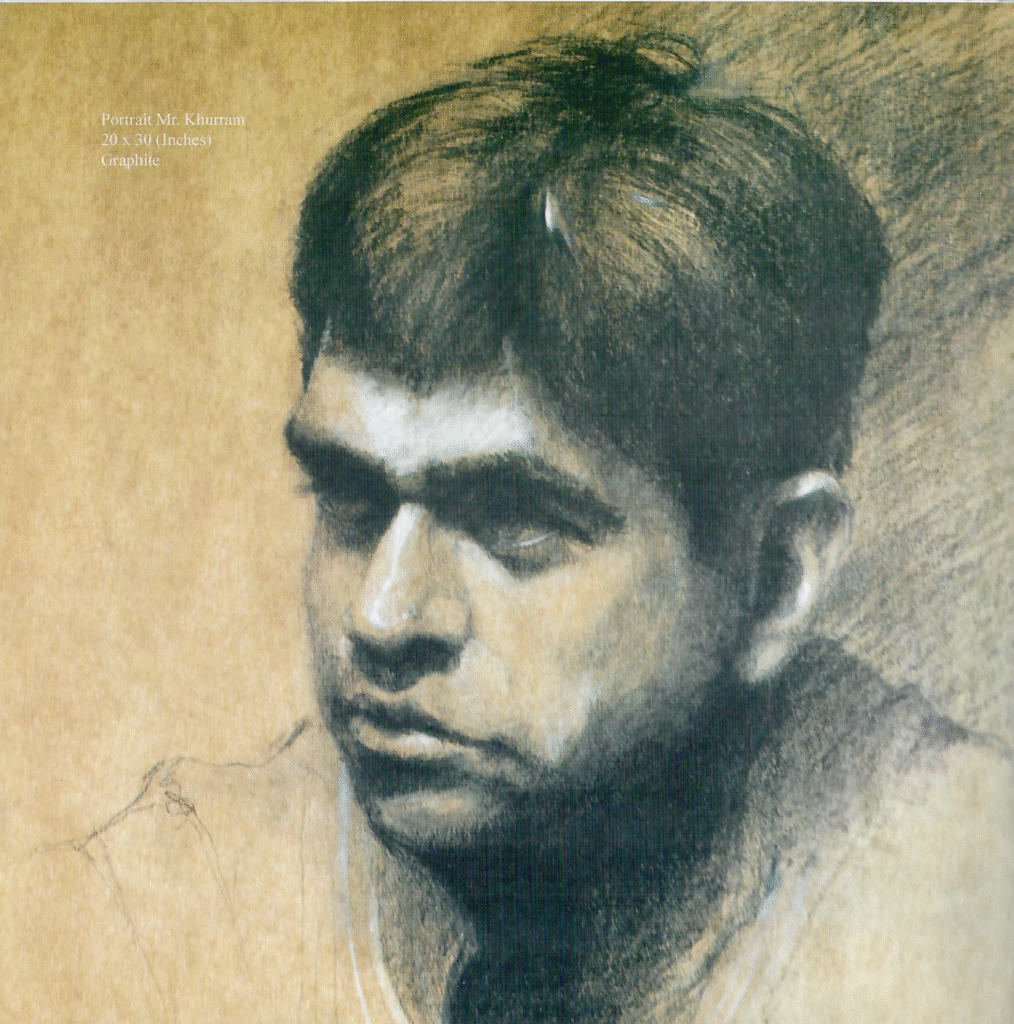
Mahmood earlier worked in charcoal, his early drawings.
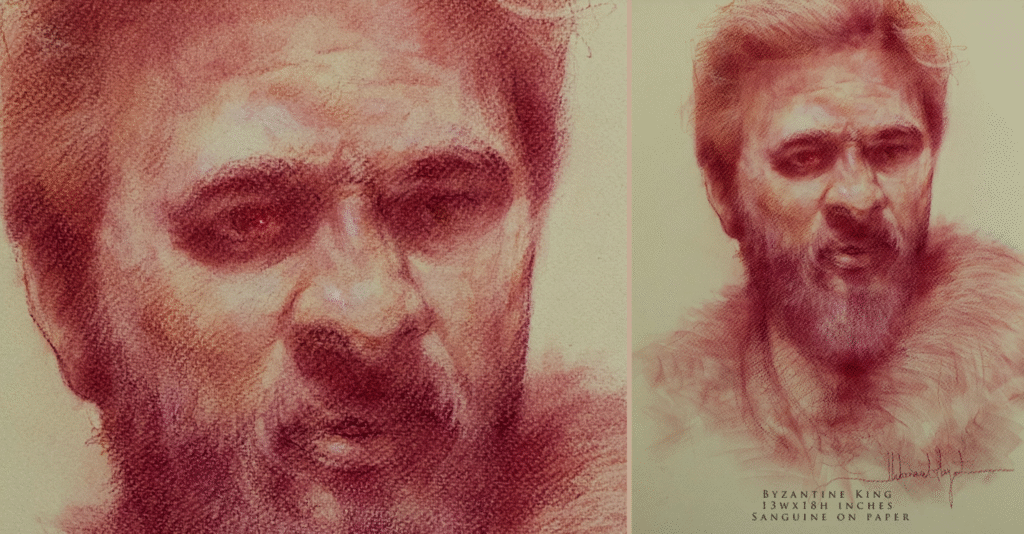
Mahmood Demonstrative work in Sanguine, which is alluded to while discussing his time during Covid-19.
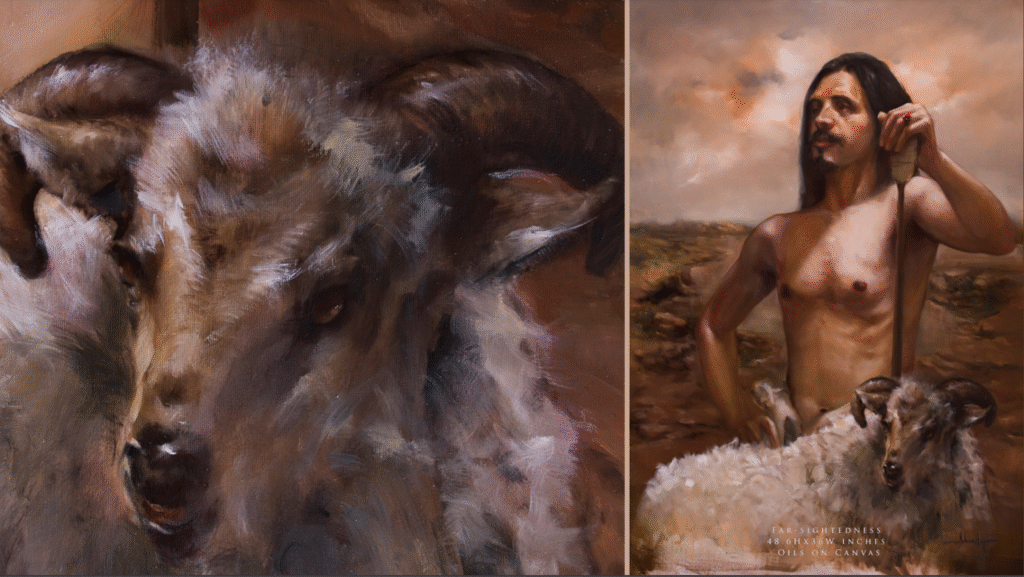
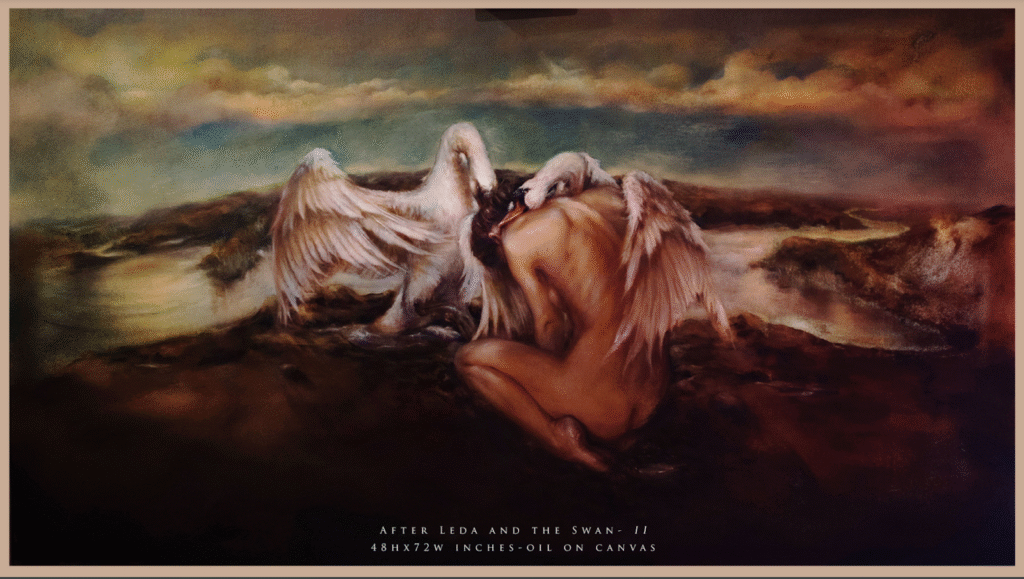
Mahmood’s latest work from “Divulgence” his most recent exhibition, which is alluded to in the interview.
Leave a Reply