Across Pakistan, a quiet return to earth, lime, bamboo and stone is underway — not out of nostalgia, but because these materials are cheaper, cooler and more resilient than what replaced them. When floods hit Sindh in 2022, cement structures cracked under the pressure while shelters built from mud and bamboo stood firm or were easily rebuilt with local labour. This page gathers what we’ve learned so far about the materials, the techniques, and the people carrying this work forward — in Pakistan and beyond.

Planning a project? Skip to a decision guide for choosing which approach fits your situation — post-disaster, rural self-build, urban CSEB, or incremental — each with a proven precedent.
Materials & techniques
Compressed Stabilised Earth Bricks (CSEB)
Most housing in Pakistan is built with burnt red brick (environmentally costly to fire) or kachi, unburnt clay brick, which is cheap but not considered durable for long-term construction — even though some kachi-brick houses have lasted over a hundred years. A Compressed Stabilised Earth Brick sits between the two: soil is compressed under pressure, often with a small amount of stabiliser, into a dense, precise block. Interlocking CSEB bricks go a step further — each brick locks onto the next like a Lego block, which speeds up construction and cuts down on labour and mortar.
In 2020, Usama got hold of a hand-operated interlocking CSEB press from Islamabad and began building with it directly — a way of staying honest about the material rather than just writing about it. Ar. Shahid Khan of Indus Earth Trust has taken CSEB further than almost anyone in Pakistan, building homes suited to urban settings with it. Read more about building a modern house with CSEB →
Traditional mud & adobe
Mud, bamboo, clay and lime are some of the oldest building materials we have, and for good reason: they’re inexpensive, fast to build with, cheap to maintain, and naturally insulating — keeping homes cool in the day and warm at night. Pakistan already has working examples of this at community scale, from the Lahore Organic Village to Ejad House and the Ghulkin eco-village.


A historic case study: Pakpattan, 1977
Pakistan was experimenting with compressed earth brick decades before it became a talking point. In 1977, a settlement of around 100 homes was self-built in Pakpattan through technology transfer — homeowners were trained and given material to build their own houses, including a community dispensary. Nearly fifty years later, the homes are still standing and in use, proof that mud, used well, is not a stopgap material. Read more about the Pakpattan community →


Incremental, expandable housing
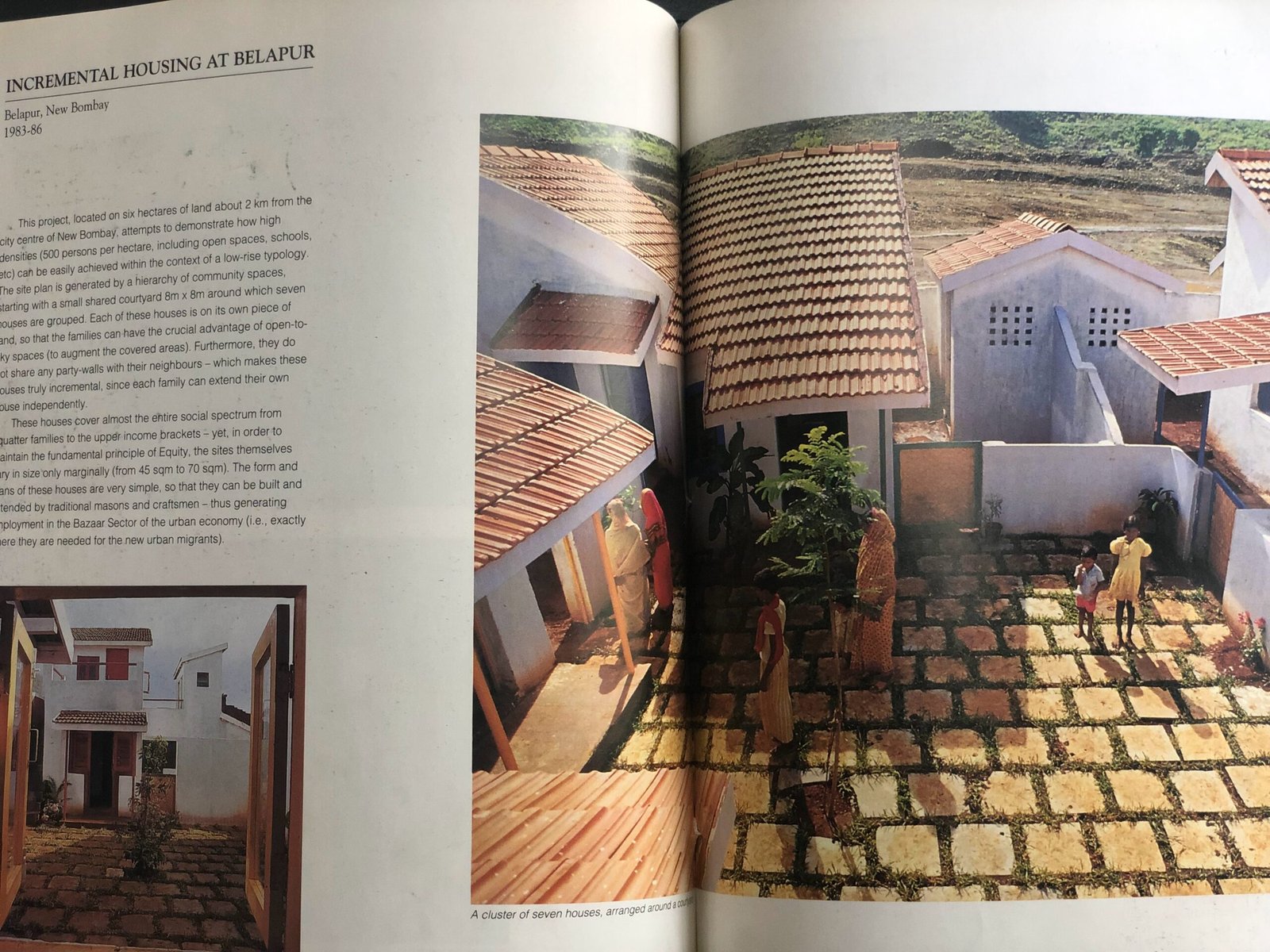
Materials aside, how a house is designed matters just as much. Charles Correa’s Incremental Housing at Belapur gave families a small core unit and room to expand as their needs and finances changed, rather than a fixed structure built all at once. It’s a useful idea for anyone building on a budget: you don’t have to build the whole house today. Read more on incremental housing at Belapur →
The missing piece: better tools
What natural building in urban Pakistan lacks most isn’t knowledge — it’s accessible tools and machines. A hand-operated CSEB press is still hard to source locally, and better equipment would go a long way toward making sustainable material a realistic choice in cities, not just villages. This is active, ongoing work — see the “Building with Mud” section of the Commune roadmap for where that stands.
People carrying this work forward
Yasmeen Lari, Pakistan’s first female architect, spent much of her early career on high-rise buildings for big corporations before turning to what she calls “barefoot architecture” — zero-carbon homes built from lime, mud, bamboo and stone for the poorest communities, costing a fraction of conventional housing. She received the 2023 RIBA Royal Gold Medal for this work.

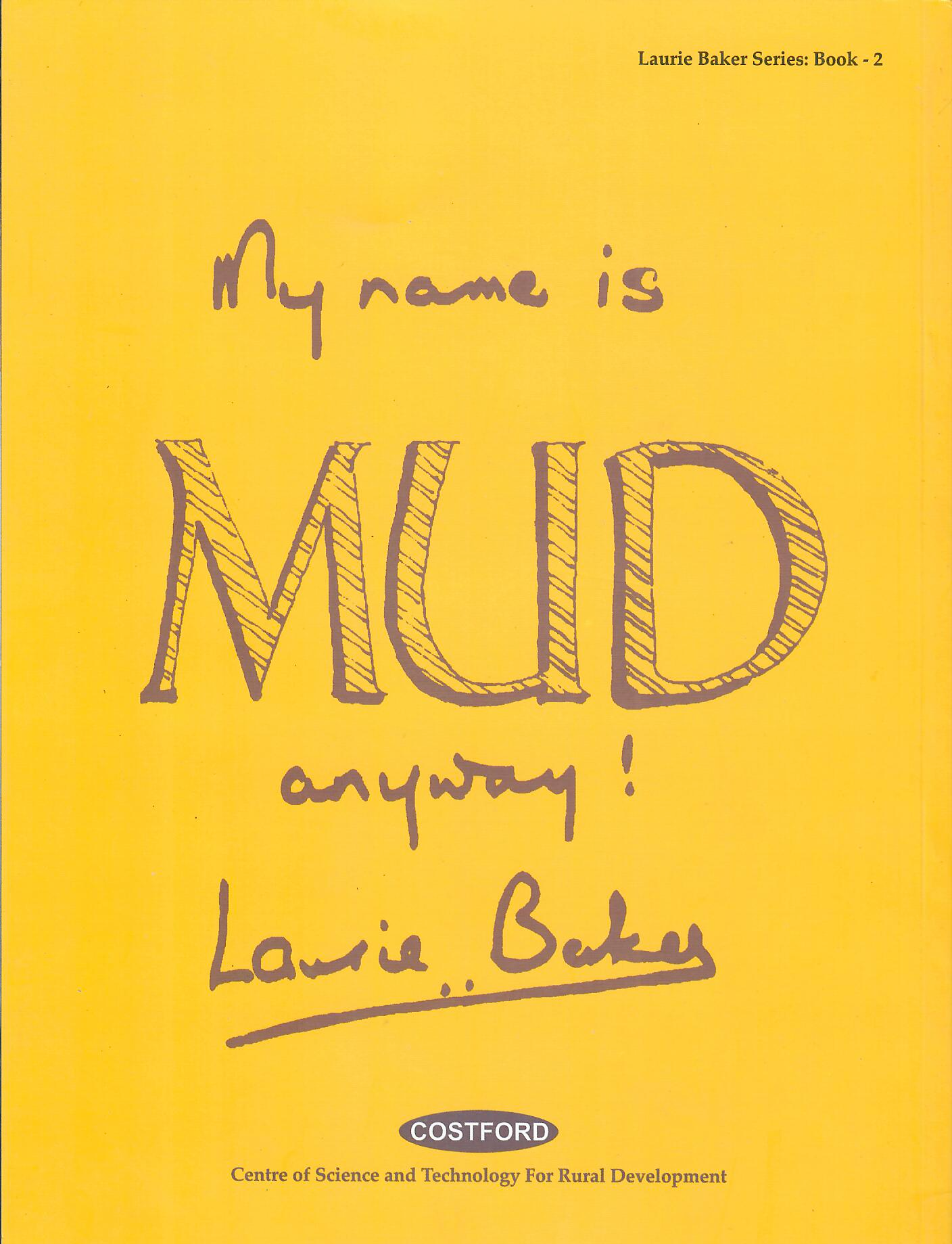
Laurie Baker, a British-born architect who settled in India after a chance meeting with Mahatma Gandhi, spent his career unlearning conventional construction and relearning indigenous techniques, building extensively for India’s poor using local, low-cost materials. He received the Padma Shri in 1990 and founded COSTFORD to document and spread his methods.
Ar. Shahid Sayeed Khan, founder of Indus Earth Trust, has built 10+ different CSEB and bamboo housing models about an hour outside Karachi, each suited to different needs and budgets. He won the 2020 IAP Zero Carbon Design Award for this work.
For the fuller profiles of these three, plus Nader Khalili, Hassan Fathy and Charles Correa, see the architecture & vernacular building resource. For a deeper look at Lari and Baker specifically — their histories, philosophies and a shared thread between two very different careers — read this essay comparing their work.
What it looks like on the ground: RIZQ’s Housing Innovation Lab

Launched after the 2022 floods displaced over 1.7 million people in Sindh, RIZQ’s Housing Innovation Lab prioritises long-term rehabilitation over short-term relief, in partnership with Yasmeen Lari’s Heritage Foundation. The project won the $500,000 Citi Global Innovation Challenge and, so far, has delivered:
150 eco houses built · 150 smokeless stoves · 75 eco toilets · 19 hand pumps · 12 solar panels · 400+ villagers trained
The next phase aims at 1,000 more houses, new prototype designs, and partnerships with educational institutions to keep training the next generation of builders.
Working on a project?
We occasionally advise architects, NGOs and developers on natural-building strategy for housing, urban and community projects.
A note from Usama: I learned to build with an interlocking CSEB press in 2020, not long after being introduced to Laurie Baker’s work. Since then I’ve advised RIZQ’s Housing Innovation Lab in its partnership with Yasmeen Lari’s Heritage Foundation, helping build over 150 homes. This page is a working record of what I’ve learned along the way, and I keep adding to it as the work continues — browse the rest of the field guide.